THE STURGEON
The Threat
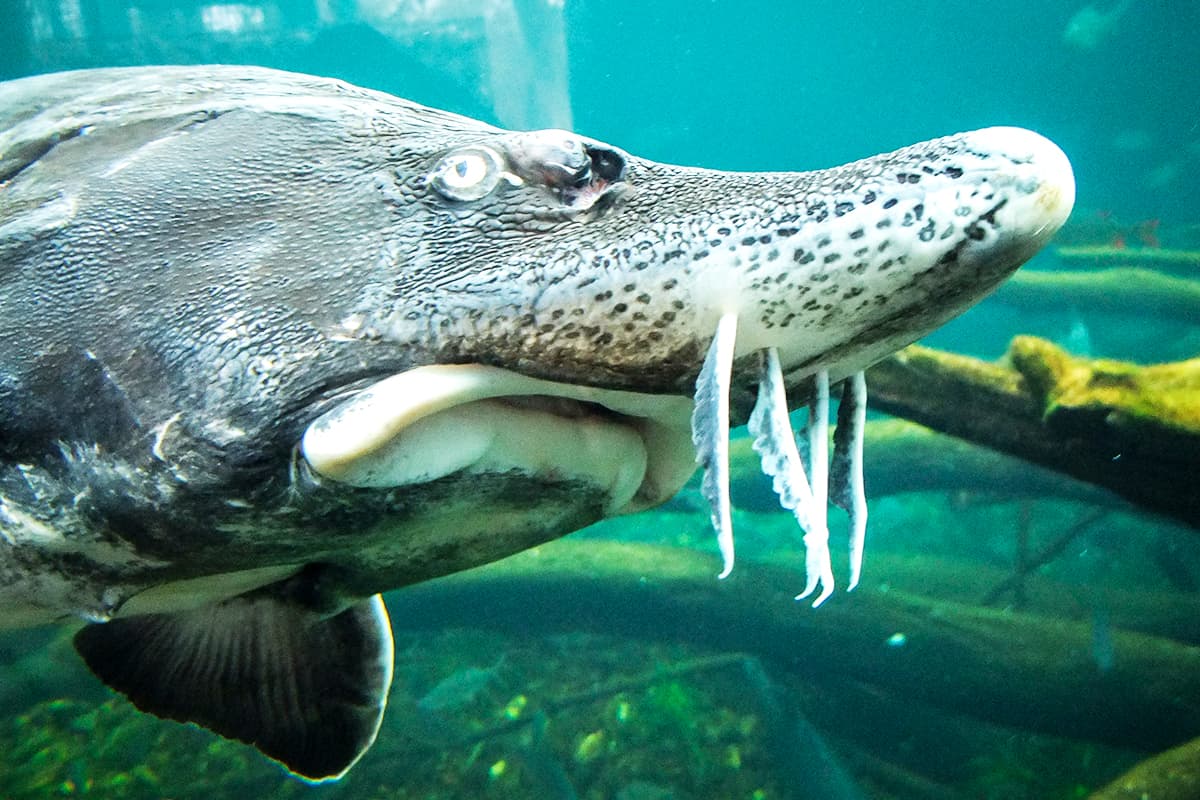
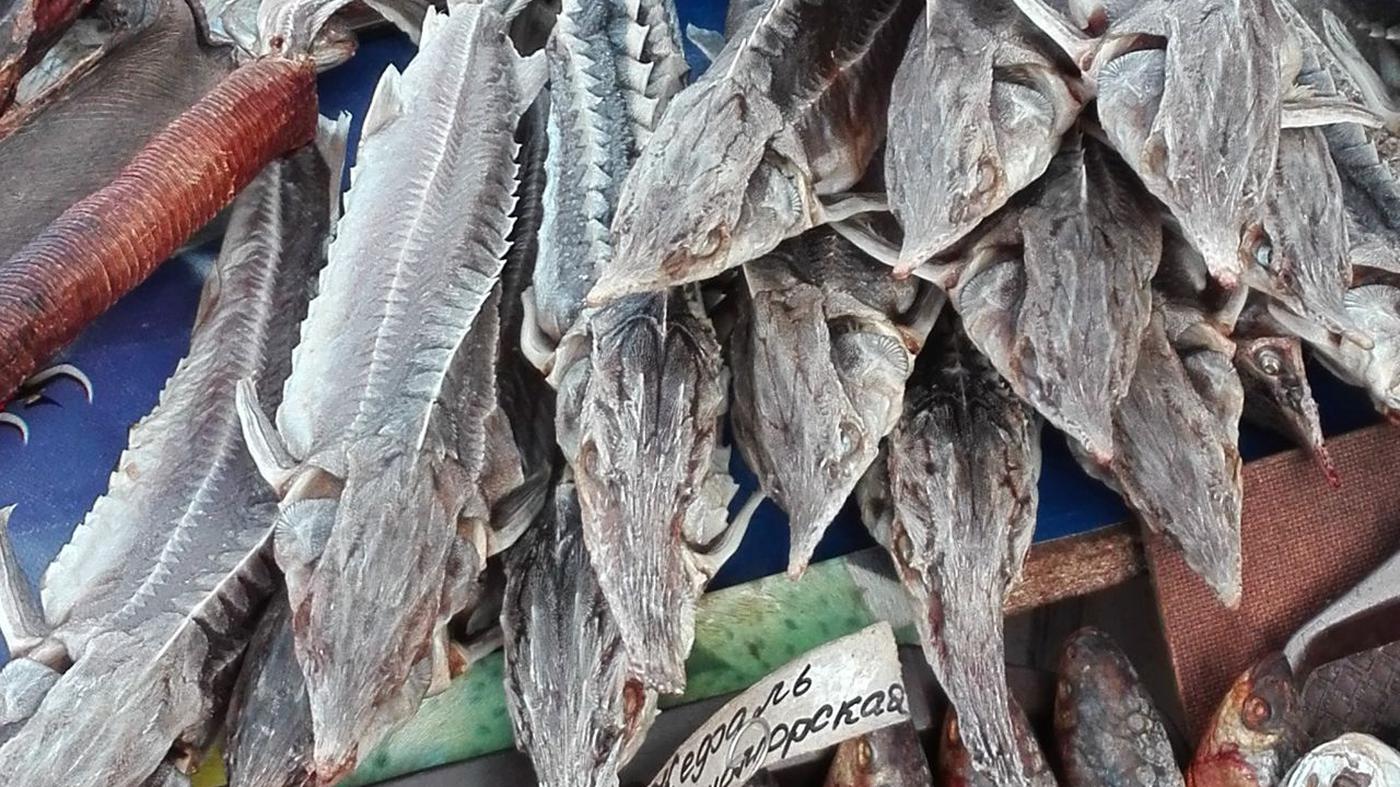
Sturgeons existed on our planet even before the dinosaurs and can live to be over 100 yearsold. Overfishing, poaching, and habitat loss have drastically reduced global stocks over thelast 30 years.
All 27 species of sturgeon have been protected by the Washington Convention on International Trade in Endangered Species (CITES) since 1998. It is expected that the wild populations of many sturgeon species will disappear within a few years. In most countries today, legally traded caviar is only produced in sturgeon aquaculture.
It takes about eight to ten years for a female sturgeon weighing 10 kg to carry eggs for the first time in its life. From this age onwards, the females are slaughtered for caviar harvestingin aquaculture facilities.
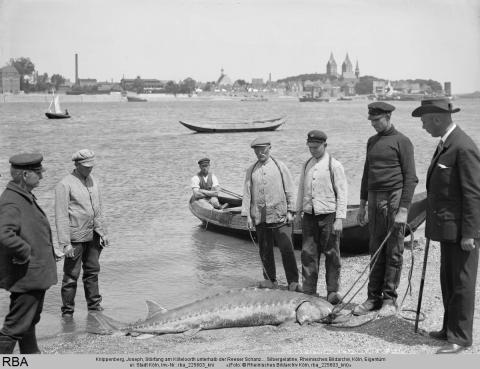
Last catch of a wild sturgeon in the German river Rhine in 1930.

THE STURGEON
Sturgeon in Aquaculture
in der Aquakultur
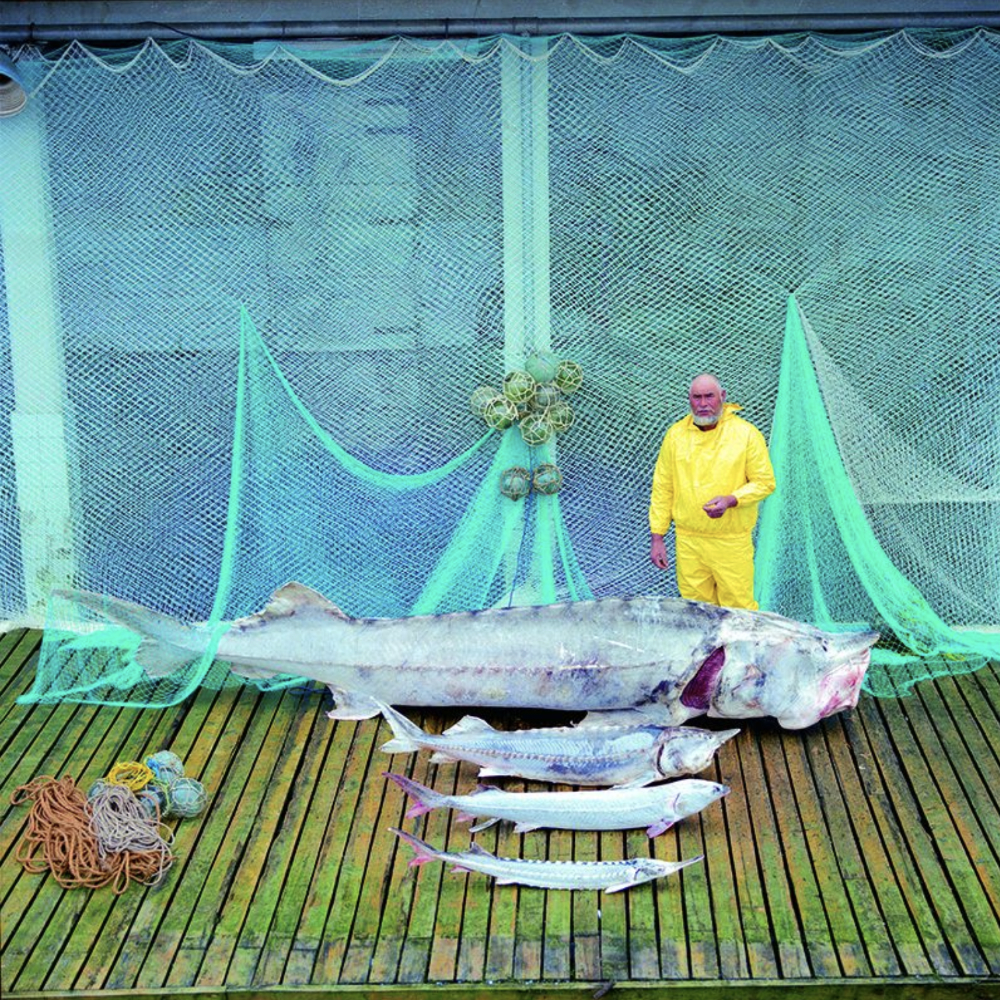
Globally, there are over 2000 farms which reproduce, feed and grow sturgeon, but only aroun 100 farms meet the preconditions for using the AWI patents by animal wellfare, simulation of seasons for egg maturation and harvest as well as HACCP and CITES registration.
The sturgeon in aquaculture live in a remote landscapes in pond facilities and breeding stations and in Recyling Auquaculture Systems RAS, preferably in combination. Ourlicensees are located in different climate zones and offer optimal conditions for breeding sturgeon and producing caviar keeping the females alive. The sturgeon are raised and cared for from egg to adult.
At the age of eight to ten years, some sturgeon species produce eggs for the first time in life like the Siberian and Russian sturgeon. Repeated maturation of females range from 1 year to 2 years with more eggs and larger eggs. Other species, such as the Beluga sturgeon, take up to 26 years to reach fertility in the wild and around 16 years in aquaculture under optimal conditions before the first egg harvest. For them the reproductive cycle takes much longer, mostly several years.
THE STURGEON
The harvest
The sturgeon for our caviar are carefully selected using ultrasound analysis of egg maturation. After a simulation of natural hibernation, light and warmth as harbingers of spring are used to encourage them to release their eggs: Gentle massaging of the belly causes the ripe, clean, beautiful eggs to fall into stainless steel containers. It then takes another 12-24 months of the best water, feed, and care before the female sturgeon lay eggs again, and in the case of beluga sturgeon it takes up to 5 years in aquaculture.
THE STURGEON
Global caviar production
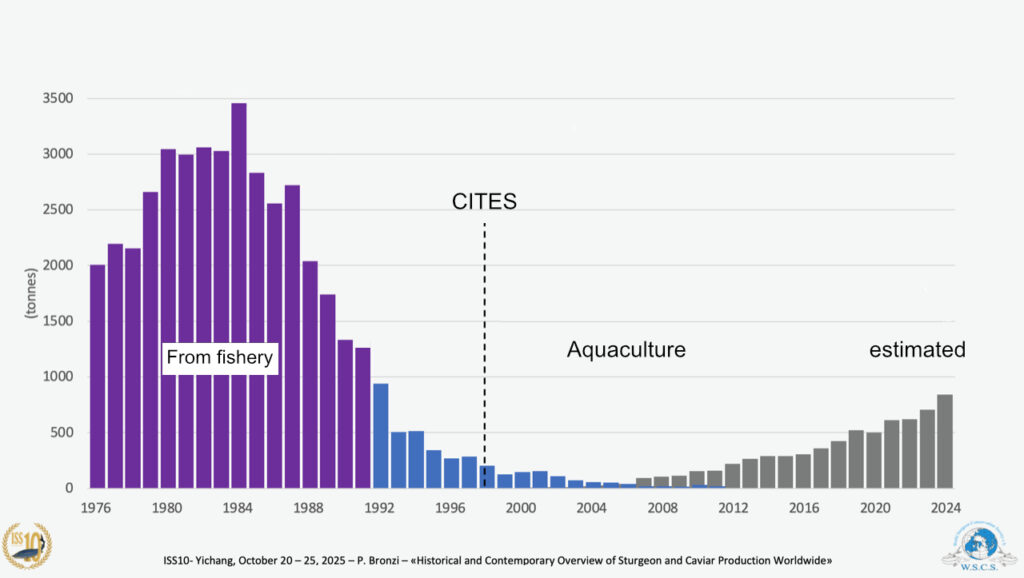
Global caviar production (t) from fisheries (black) (1976–2011 taken from FAO statistics), and the estimates (blue) obtained for aquaculture(grey) from various sources (1991–2016).
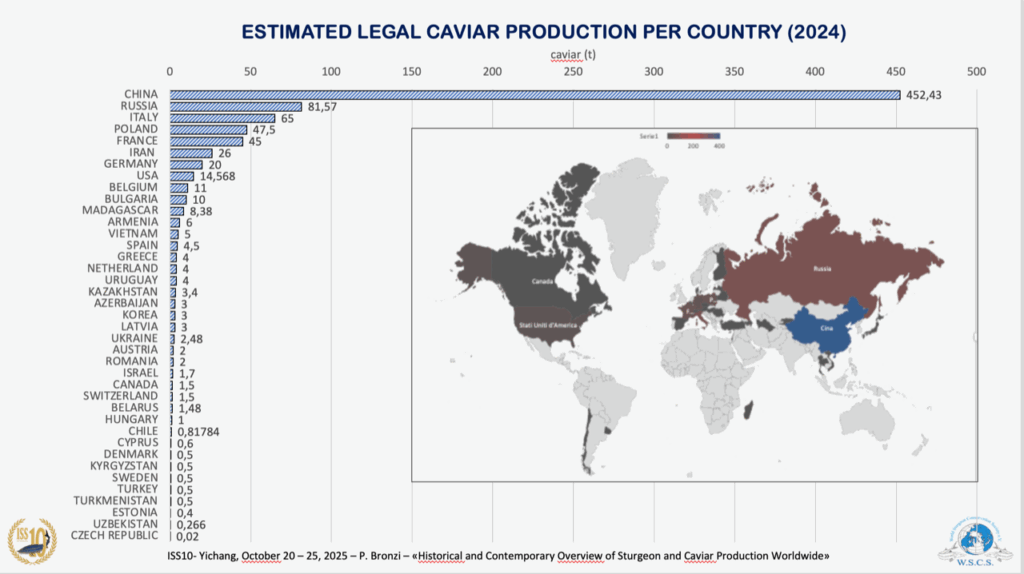
2024 (t)
China is estimated to have reached a caviar production volume in 2024 of around 450 tons. Paolo Bronzi, ISS10 Yichang, October 20-25, 2025, Historical and contemporary overview on sturegon and caviar production worldwide.
Sturgeon meat and caviar production: Global update 2017. J Appl Ichthyol. 2019;35:257–266. by Paolo Bronzi; Mikhail Chebanov; James T. Michaels; Qiwei Wie; Harald Rosenthal; Joern Gessner